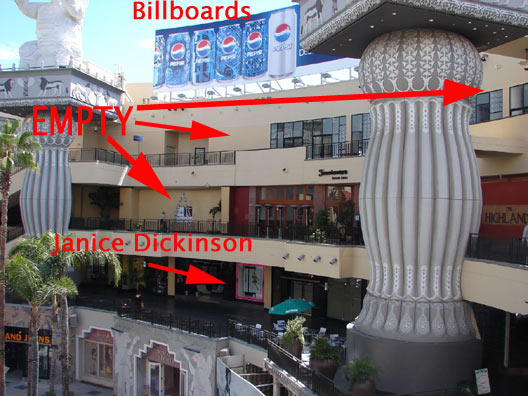
Yes, Vitruvius. This building is expressive of function. Literal references connect with the public, and convey messages more efficiently and directly than abstract imagery. Depending on context, this can be very useful. [more...]
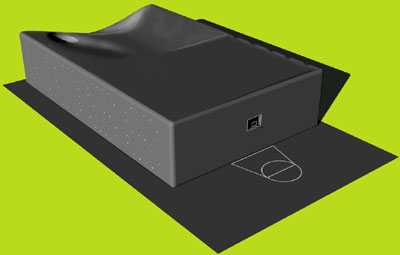 This project is by one of the leading mockitecture firms in the world, NL Architects. The basketball hoop is also the building's only window. The WOS 8 was designed to grow into a public space in the new part of Utrect, Leidsche Rijn. This building addresses the issue of applied vs. integrated ornament. This ornament is integrated, and serves a very useful purpose. This is when ornament is at its strongest. This building accepts the inevitablilty of the object, and embraces, even didacticizes the potential of the users' experience of said object. More to come on this great firm.
 Credit the beginning of mockitecture to a mother in London from the 19th century named Frances Trollope. Leaving her children behind, she traveled to America, staying in Cincinnati, Ohio - a hub in the westward expansion of America during the Industrial Revolution. Ms. Trollope critically denounced Cincinnati as a city built of "architectural sameness." In response, an entertainment and shopping center was commissioned as a business venture for her son. This building was conceptualized by Trollope, and French painter, Auguste Hervieu, to be a "distinctive, light-hearted" building.
"The Bazaar was an amusing concoction of Moorish, Egyptian, and Gothic elements. It was one of the first examples of the spirit of Eclecticism - drawing upon historic styles from various exotic cultures - which came to dominate American building for the remainder of the century.""Cincinnatians and visitors, who were accustomed in public buildings to the simplicity of the vernacular [...] delighted in attaching what they regarded as the tastelessness of the 'bizarre bazaar'."