Showing posts with label brutalism. Show all posts

February 2, 2009

Burberry Brutalism

"Brutalism" - for those of you not entirely familiar - is an architectural movement made popular at the height of the modernist movement in the 1960's.  It's name is lovingly adopted from the French term "Beton Brut" meaning "raw concrete".  Buildings designed in this "style" (if you will) are characteristically rough and blocky - typically constructed of cast-in-place concrete.  Wood grain from formwork used to cast the concrete often becomes embedded in the structure, suggesting (of other things) man's dominance over nature!  Such structures poetically reinforce the ideals of the modern era and its "one-size-fits-all" internationalist attitudes.  Above all, this architectural movement has undoubtedly succeeded in creating an enduring symbol of strength and force - an icon cheerfully adopted by city governments and universities worldwide.

Critics of the movement would argue that the necessity to achieve an architectural ideal has overshadowed the needs of people who use the buildings.  I defend: brutalist buildings also loyally and respectfully tell a story about how the building is being used.  From the exterior, one can differentiate between the spaces where people tend to their business and the spaces designated specifically for structure or service.  The same cannot always be said for today's technologically advanced rain screen systems and super-duper perforated metal skins.  We must ask ourselves, why must we cover our buildings with a veil of technological fabric - what do we have to hide?

I am and always will be a strong advocate for the resurgence of brutalist architecture in today's scary scary world, however I know this seems to be a confusing and horrible idea for most people to stomach.  In response, I offer a truce to all of you critics in the eWorld who simply hate brutalism.  I want to advocate for a Pop-Brutalist architectural movement by responding to the tastes of our times: let's dress our beloved Beton Bruts up in trendy new fashionable clothing.  Can you imagine Boston City Hall...or the Hayward Gallery (and its Brutalist neighbors) dressed in a nice Burberry scarf?  How fashionable!

February 1, 2009

Pop and Things Like That

After reading this post from Owen, of South East London, connecting post-punk with brutalism, and this post, by Charles, more Building-Songs are in order.

If architecture is a part of the contextual condition which leads to pop, and therefore helps to dictate the course of music written in such a context...

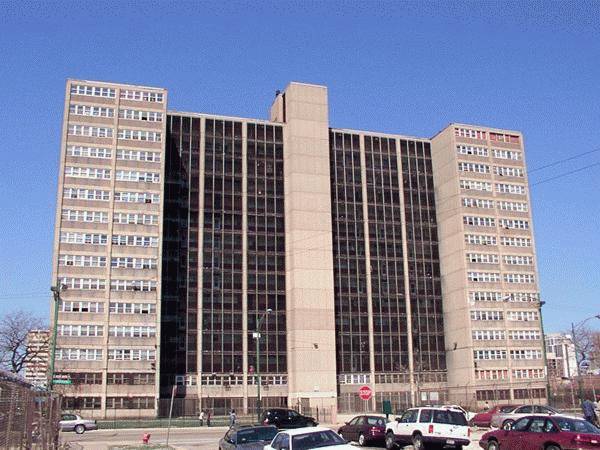
The broken glass, boarded up windows, and dark alleys along with authoritarian housing projects like Cabrini Green definitely portray the underpinnings (anger and poverty) of the early 90's gangsta rap movement.


Maybe a little dark, but I thought it was a pretty good Building-Place/Song. Perhaps architecture has always been ahead of its time, and therefore has failed to meet the goals of its intended users because the social conditions change so quickly. By the time conditions are right for Modernist social housing, the buildings are already outdated? This is a huge success of PostModernism. Going back to the Charles Moore/Soul Train pairing, perhaps Moore and Venturi were on to something. When architecture looked to pop, it "slowed down" and became humanist again. The incorporation of playfulness and pleasure relates well to Pop.

On a lighter note, this is the elementary school that I attended. Parkside Elementary, Columbus, IN. Look at the beautiful grass, the trees, and the curvy entrance. A suburban dream. Nintendo music, while imported from Japan, is a kind of audible PCP, made to entrance children into their dreamy suburban existence. Even the MIDI structuring of the music suggests the modernist rigidity seen in Parkside's bay system.


Or maybe that concept would be more fitting if you knew that there was a brutalist elementary school that was our rival. Southside Elementary, 1969 by Eliot Noyes.


I am not saying that Nintendo music was explicitly made in a conspiracy from the Japanese ministry of education and Nintendo, but the cultural constructs, which govern and tie together architecture, pop, music, government, etc. infuence music and architecture, and are also influenced by each.

November 19, 2008

The Front Lines: {[(r e t r o)]} fit

The Hayward Gallery, London
photographs from the 2008 Psycho Buildings Exhibition shows the roof of this brutalist building converted into a temporary lake where exploration into uncharted territory was facilitated by hand-made rafts::


June 27, 2008

Brutalism meets Beach Town


Biking around Hilton Head, I saw perhaps the most out of place building I have ever seen in my life.  The remnants of a past era.  A monument to the architectural styles of yesteryear.  However, this building was no typical call-it-what-you-will post war modernist building.  It is said that every building tells a story and this example is no different.  Like a parasite invading its host, the brutalist style certainly invaded even the most serene of places.  However, this virus was met with an anti-viral cure: the Hilton Head planning department.  The result? A sleek new building, half brutalist, half beach/resort style.  


A virus, by definition, cannot multiply until it is inside the body's cells.  By restraining trendy, stylish architectural design as it was invading the town, Hilton Head's government effectively restrained the virus, preventing its spread outward into the rest of the beach-resort town. 

April 3, 2008

Neo-Brutalism of the Far East: North Korean Paranoia


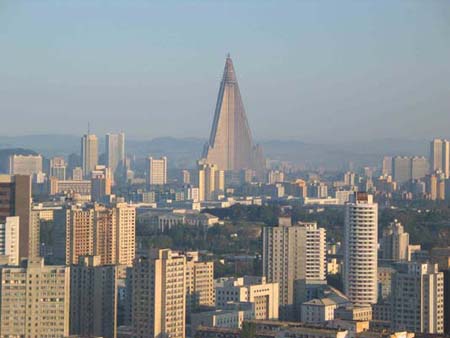
This is the Neo-Brutalist Ryugyong Hotel in Pyongyang, North Korea. It’s a 1000 ft tall pyramid-shaped building with 3,000 rooms, and was supposed to have 7 revolving restaurants, except they never actually finished it. Wikipedia says:

"newspapers estimated the cost of construction was $750 million - 2% of North Korea’s GDP - and it is generally assumed construction came to a halt in 1992 due to lack of funding, acute electricity shortages, and the prevailing famine."

The building itself is complete, however it has no windows, fixtures or fittings - which makes it officially the world’s Tallest Unoccupied Building! In fact, it’s the tallest building by far in North Korea, the 18th tallest building in the entire world, and if it were ever to be completed, would be the world’s tallest hotel. Here’s a picture which really gives you a great impression of scale. It was intended to rival the capitalist skyscrapers of S Korea, but money ran out and work was abandoned in the 90s. It now sits empty, unfinished, and almost certainly structurally unsound. Rumor has it that official DPRK maps are not allowed to show its location, even though the structure towers over the city (and is pretty impressive on Google maps).

Ryugyong is one of the most important mockitectural buildings of the 20th century. It is a huge failure. It is a joke of a building, bad mockitecture, but offers us further proof of mockitecture's sociological and political leverage.

Ryugyong is a communist memorial. The hotel embodies the failure of Communism. Beauty in 1000 feet of concrete bliss. It towers over the city like a regime. However, it is a physical representation of a good idea gone wrong, much like communism itself.